Acupuncture for Stress and Burnout: What It Actually Does
Stress has become so ordinary that most people have stopped noticing how much they are carrying. The tiredness that does not go away after a weekend off. Sleep that does not restore. A sense of running on empty that has become so familiar it no longer sounds like a problem.
Burnout is what happens when that state goes on long enough. It’s way more than a simple “being tired”. It is a nervous system that has been in overdrive for so long that it has forgotten how to slow down and rest — and a body that is paying the price.
Acupuncture is one of the things I use most consistently in the studio for stress and burnout. It’s not a substitute for rest, boundaries, or making changes to whatever is driving the stress in the first place. But it’s helpful because it works directly with the nervous system in a way that is hard to replicate through other means (and because for a lot of people, it is what finally makes the rest possible).
This post is about what is actually happening in the body when stress becomes chronic, what burnout looks and feels like from a technical perspective, and what acupuncture can and cannot do to support you.
The difference between stress and burnout
Stress and burnout are not the same thing, though they have a lot in common. The distinction matters because it changes how the situation needs to be approached.
Stress is a state of too much: too many demands, too much pressure, too much activation. The system is overloaded but still engaged. Stress responds relatively well to rest, support, and reducing the load — the body can bounce back.
Burnout is a state of depletion. It tends to follow a prolonged period of stress that was never properly resolved. By the time someone has reached full burnout, the picture tends to include: emotional exhaustion, a detachment or cynicism that was not there before, and a persistent sense that nothing you do makes much difference. Rest stops being restorative. You can sleep eight hours and wake up as tired as you went to bed.
The physical symptoms are often what bring people through the door: persistent fatigue, disrupted sleep, jaw clenching, tension in the neck and shoulders, headaches, digestive sensitivity, lowered immunity, etc. These are not separate from the burnout — they are the burnout. The body does not distinguish between emotional and physical load.
What chronic stress does to the nervous system
The autonomic nervous system has two main branches. The sympathetic branch is the accelerator, the fight-or-flight system that mobilises the body for action. The parasympathetic branch is the brake: the rest-and-digest state where the body repairs, restores, and consolidates.
Under short-term stress, this system works as designed. When the sympathetic nervous system activates, the body responds, the threat passes, and the parasympathetic system restores balance. The problem with modern chronic stress is that the threat rarely passes. The inbox, the pressure, the uncertainty, the pace — they do not have an endpoint. The sympathetic system stays on, and the body never gets the signal that it is safe to rest.
Over time, this drives up cortisol (the primary stress hormone) and keeps it elevated. Cortisol was designed for short bursts. Chronically elevated cortisol disrupts sleep, affects mood, impairs immune function, interferes with digestive health, and can directly compete with reproductive hormones. It also affects the HPA axis: the feedback loop between the brain and the adrenal glands that is supposed to regulate the whole stress response. When this becomes dysregulated, the body loses some of its ability to calibrate its own response to stress.
In TCM terms, this pattern is often described as depletion of Kidney Qi and Kidney Yin — the deepest reserves the body draws on when everything else has been used up. The language is different, but the presentation is the same: exhaustion that will not leave, a system that has been running on empty for too long.
What acupuncture does
Acupuncture works directly with the nervous system. This is one of its most well-researched mechanisms and one of the reasons it can be useful for stress and burnout in a way that is truly different from other approaches.
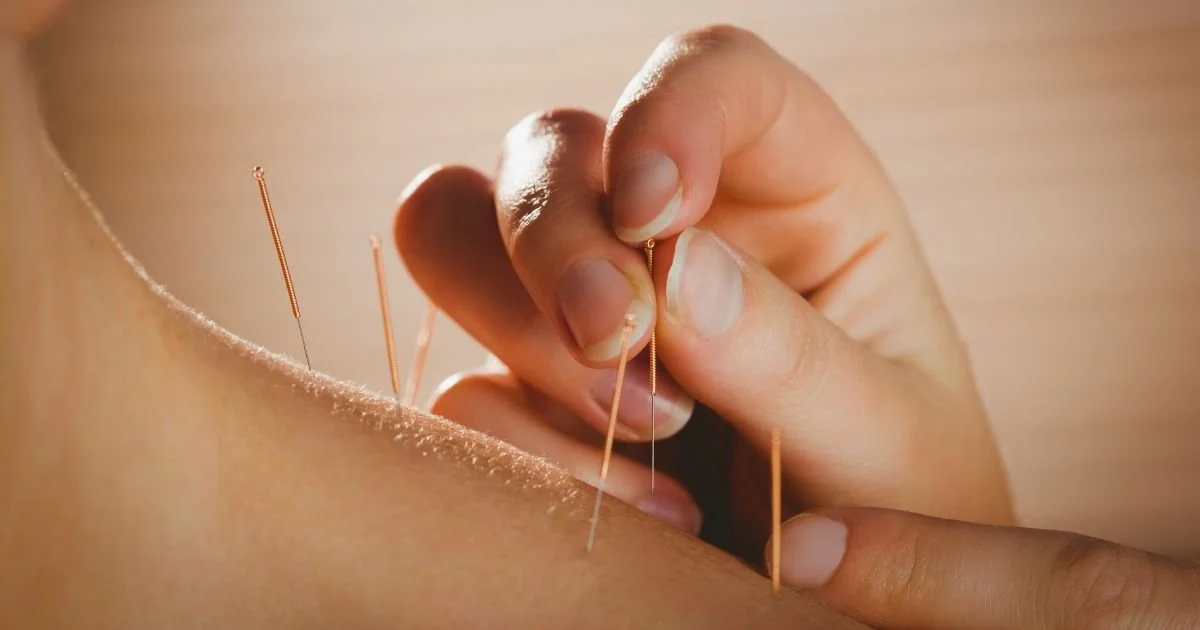
Fine needles placed at specific points on the body send signals through the nervous system. Research shows that acupuncture can shift the autonomic balance, moving the body from sympathetic dominance toward parasympathetic function. This is basically when the brake gets applied, and the body remembers how to slow down.
The effects on cortisol have also been studied: multiple reviews suggest that acupuncture can help lower cortisol levels and support more normal HPA axis function — interrupting the cycle where chronic stress keeps driving more stress hormone production. A 2024 review in the Journal of Integrative Medicine found that acupuncture can have a normalising effect on HPA axis function, modulating the neurotransmitters and hormones involved in the stress response.
Beyond cortisol, acupuncture may influence serotonin, GABA, and endorphin release — neurochemicals involved in mood, sleep quality, and the body's own pain and tension regulation. It also appears to affect heart rate variability, a key marker of stress resilience and nervous system health. A 2023 meta-analysis in Complementary Therapies in Medicine found that real acupuncture had a superior effect over placebo in increasing parasympathetic tone — the branch of the nervous system responsible for rest, recovery, and repair.
What this means in practice: most people notice something in the session itself — a quality of rest that feels different from ordinary relaxation, the kind of quiet the body has not had access to in a while. This is the parasympathetic system doing what it is meant to do when the sympathetic system finally lets it.
The results build over time. A single session can make a meaningful difference (research suggests even one treatment can reduce perceived stress measurably), but the lasting change comes through a course of sessions because the nervous system learns to find that state more easily.
What a consultation and treatment look like
Every session starts with a conversation and a TCM (Traditional Chinese Medicine) assessment. Pulse, tongue, what has changed since last time. I am looking at the whole picture: sleep, digestion, energy at different times of day, where tension is sitting, and what the stress has been doing to the body over time.
This matters because stress and burnout present differently in different people. For some, it is primarily the sleep: wired at night, exhausted in the morning. For others, it is the physical tension: the jaw, the neck, the shoulders that never fully release. For others, it is the emotional exhaustion, the sense of disconnection, the irritability that surfaces more easily than it used to. The treatment is built around what is actually happening in your life, not a standard protocol.
The session itself is pretty straightforward. Needles in, time to rest, needles out. Most people are surprised by how they feel getting off the table — not just relaxed, but different in a way that is difficult to describe.
I will also sometimes use cupping or other adjunct techniques depending on what is needed. For people whose stress is very physically held (in the back, the shoulders, the neck), cupping can release a level of tension that acupuncture alone does not reach as quickly.
What acupuncture cannot do
Acupuncture obviously cannot remove the source of stress. If the problem is a job that is unsustainable, a situation that needs to change, or a pace of life that is beyond what the body can maintain, acupuncture will support the body through that, but it is not a substitute for the harder work of making changes.
It also works best as part of a wider picture. Sleep, movement, how and when you eat, what you ask of yourself — these matter. What acupuncture can do is create a supportive situation where those other changes become more possible: a period of greater regulation, lower baseline tension, better sleep, less tension in the body, etc. For a lot of people, that situation is exactly what was missing.
Recovery from significant burnout takes time. The nervous system did not get there overnight, and it will not recalibrate overnight either. Realistic expectations should be part of the plan.
If any of this sounds familiar
The people who come in for stress and burnout are often not people who think of themselves as struggling. They are people who have been keeping going, managing, adapting — and who eventually notice that something is not right (sleep, patience, energy).
If that is where you are, a consultation is the right starting point. We will talk through what is happening, what has been going on over time, and how acupuncture can help.
You can book through the button below, or get in touch if you have questions first.
Frequently asked questions about acupuncture for stress
-
Yes, research supports acupuncture's ability to regulate the autonomic nervous system, reduce cortisol levels, and support the body's shift from fight-or-flight toward rest-and-digest function. The effect is not just subjective — there are measurable changes in stress markers and nervous system function associated with acupuncture treatment.
-
Yes, it can support recovery from burnout. Burnout involves nervous system dysregulation and depletion that acupuncture works with directly (through HPA axis regulation, cortisol reduction, and supporting the parasympathetic nervous system). It works best alongside practical changes to sleep, workload, and lifestyle, rather than as a standalone solution. A course of sessions is typically needed for meaningful and lasting change.
-
This depends on how long the stress has been building and how the body has responded to it. For acute stress, people often notice a significant difference within 3-4 sessions. For burnout (where the nervous system has been dysregulated over a longer period), a course of sessions (weekly sessions for maybe 4-6 weeks initially) is a more realistic starting point, with reassessment along the way. I will always give you an honest picture of what to expect at the consultation stage.
-
Most people are surprised. The needles are fine and the sensation is generally mild. Once they are in, the body tends to settle quickly — often into a quality of rest that is distinct from ordinary relaxation (that’s what acupuncturists call “acunap”). Most people leave feeling noticeably calmer, less tense, and more grounded than when they arrived. Over a course of sessions, that state becomes easier to access between appointments as well.
-
Yes. Amanda Nordell Acupuncture is based in Windy Arbour, Dublin 14, and offers acupuncture for stress, burnout, anxiety, and related conditions as part of a full Traditional Chinese Medicine practice. Consultations can be booked directly on the website.
-
Yes. Acupuncture is a safe and well-tolerated treatment for the vast majority of people. It is non-invasive, medication-free, and has a low risk of side effects when administered by a qualified practitioner. Amanda is a registered acupuncturist and member of the Acupuncture Foundation Professional Association (AFPA). If you have any specific health conditions or concerns, these are always discussed at the consultation stage.