
10 Facial Acupuncture Benefits for Natural Skin Rejuvenation
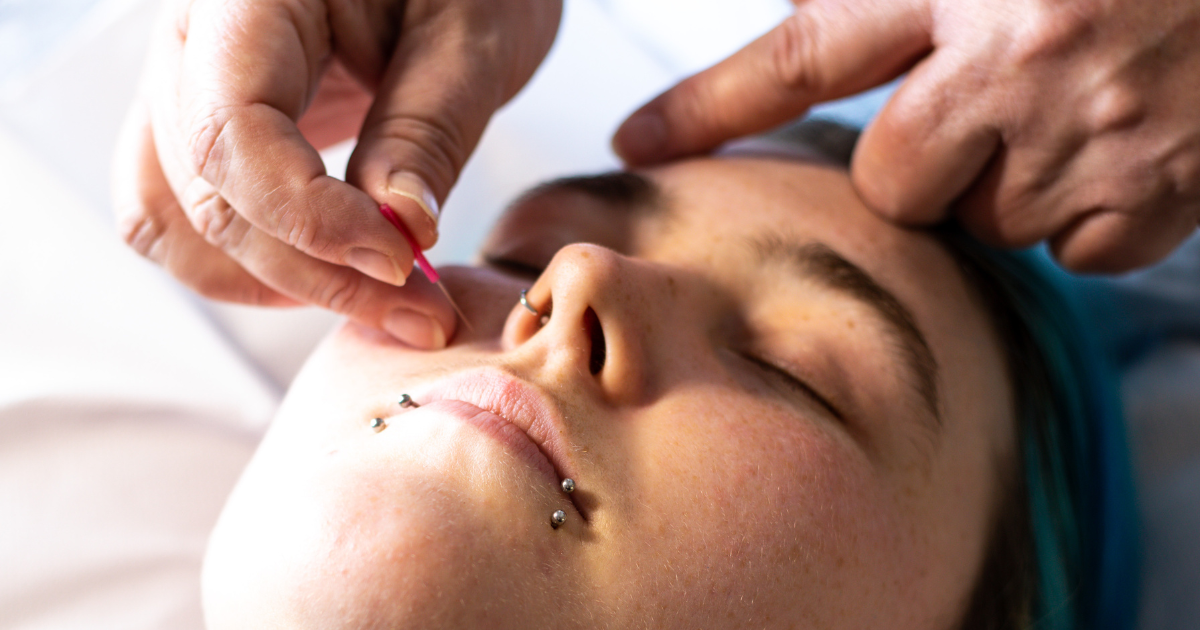
Facial acupuncture is often talked about in terms of results: you’ve probably heard of things like brighter skin, softer lines, and a fresher look. But in practice, the conversation usually starts somewhere else.
Most people come in because their skin feels different: more reactive, more tired, slower to recover. Or simply not behaving the way it used to. And more often than not, those changes reflect what’s happening beneath the surface rather than anything purely cosmetic.
In Traditional Chinese Medicine, skin health is never viewed in isolation. It’s linked to circulation, muscle tone, stress levels, sleep, digestion, and the way the nervous system is coping day to day. Facial acupuncture works with all of that, gently and progressively.
A different way to think about skin health
There’s a lot of noise around facial treatments. New techniques appear regularly, often accompanied by bold claims and dramatic images. It can be hard to know what’s worth paying attention to.
What tends to get overlooked is how the skin actually functions.
Never forget that your skin is a living organ. It depends on good circulation, balanced muscle tone, hormonal signals, nervous system regulation, and the body’s ability to repair itself. In your thirties and forties, it’s common to notice that your skin starts to feel and act differently. That shouldn’t sound like an alarm, meaning it’s time to rush to get botox or purchase the most expensive skin cream. It simply means that now more than ever, it’s time to listen to your skin.
Facial acupuncture works with this reality. Rather than trying to override the skin, it supports the systems that keep it resilient over time. When circulation improves, tension eases, and the nervous system settles, the skin often responds naturally.
Visible changes still matter — I know that how we look is important to many of us. But when treatments focus on function first, the results tend to feel more sustainable and more in tune with the body.
That philosophy is the driving force behind all of my work, and it’s especially central to how I use facial acupuncture.
Below are ten ways facial acupuncture supports natural skin rejuvenation, based on biology, research, Traditional Chinese Medicine and what I see consistently in my Dublin studio.
1. Improved circulation to the face
One of the most noticeable effects facial acupuncture can have is improved circulation. The fine needle placements encourage blood flow to the skin and underlying tissues, helping deliver oxygen and nutrients while supporting the removal of metabolic waste.
Over time, this can contribute to a healthier skin tone and a more even, rested appearance.
2. Support for the skin’s natural repair processes
Facial acupuncture can create subtle stimulation in the skin and connective tissue, encouraging the body’s own repair mechanisms. Early research suggests improvements in skin elasticity and overall quality, though this area continues to develop scientifically.
Rather than forcing change, this approach supports the conditions the skin needs to function well, which is central to natural skin rejuvenation.
3. Reduction in facial muscle tension
Many lines and areas of heaviness in the face are linked to tension rather than skin quality alone. Jaw clenching, brow holding, and tightness around the mouth often go unnoticed until they’re addressed.
Facial acupuncture can work directly with these muscles, helping them soften and rebalance. As tension reduces, facial movement often feels freer, and expressions appear less held.
4. More balanced muscle tone
Facial muscles don’t all work equally. Some become overactive, while others underperform. Over time, this imbalance can influence facial contours and how expressions settle.
Facial acupuncture can help bring these muscles back into a more balanced relationship, supporting coordinated movement rather than fixed patterns.
5. Support for lymphatic flow
Fluid retention and puffiness are often linked to sluggish lymphatic movement. While facial acupuncture isn’t a manual drainage technique, it can support circulation and muscle relaxation (both essential for healthy lymphatic function).
Many people notice a lighter feeling in the face, particularly around the eyes and jaw.
6. Nervous system regulation
This is one of the most significant (and least discussed) benefits of facial acupuncture.
By supporting the parasympathetic nervous system, acupuncture can help the body move out of a constant state of alertness. When the nervous system settles, the skin often becomes less reactive and more resilient.
It’s very common for people to feel deeply relaxed during and after treatment, even if that wasn’t their original intention.
7. Stress support that shows on the skin
Stress influences circulation, digestion, hormones, and muscle tone — all of which affect skin health. Facial acupuncture works as part of a wider Traditional Chinese Medicine approach that recognises these links.
When stress patterns begin to shift, changes in the skin often follow naturally.
8. A personalised approach to skin health
Facial acupuncture is never a set routine. Each treatment is shaped around the individual — their health history, lifestyle, stress levels, and skin concerns.
This is especially true within Synergy Facial (my signature treatment since 2018), where facial acupuncture is combined with other techniques to support circulation, tissue tone, lymphatic flow, and nervous system balance in a way that feels cohesive and considered.
9. Works alongside other treatments
Facial acupuncture complements other approaches such as gua sha, microneedling, cupping, and red light therapy. When combined thoughtfully, these treatments support one another rather than competing.
This allows care to evolve as your skin and body change.
10. Encourages long-term awareness and care
Over time, many people become more aware of how they hold tension in their face and body. That awareness often leads to small, meaningful changes — less clenching, softer breathing, better rest. These shifts play a quiet but important role in long-term skin health.
Considering facial acupuncture
Facial acupuncture offers a different way of thinking about skin rejuvenation. Rather than asking the skin to perform on demand, it supports the systems that allow it to function well over time.
If you’re exploring facial acupuncture benefits, simply looking for acupuncture for wrinkles, or considering a holistic facial treatment, facial acupuncture (particularly as part of my Synergy Facial) may be worth considering.
If you’d like to learn more or book a session in my Dublin studio, use the button below.
10 Facial Acupuncture Benefits for Natural Skin Rejuvenation: FAQs
-
Facial acupuncture can support skin health by improving circulation, addressing muscle tension, and encouraging balance in the nervous system. Research in this area is still developing, but early studies and clinical experience suggest it can help the skin appear brighter, more even, and better supported over time. Results vary, and treatments work best as part of a consistent, personalised approach.
-
Results are gradual rather than instant. Many people notice short-term improvements after a session, such as a fresher appearance or reduced tension. Longer-lasting changes tend to come with a course of treatments, supported by lifestyle factors like sleep, stress management, and skincare.
-
Facial acupuncture is often used to support people who experience jaw tension or TMJ-related discomfort. By working with the muscles of the face, jaw, neck, and the nervous system, treatments can help reduce holding patterns and promote ease in the area. It is used as a supportive approach and does not replace medical or dental care.
-
The jaw is a common area for holding tension linked to stress, concentration, and emotional load. Acupuncture doesn’t target emotions directly, but by supporting muscle relaxation and nervous system regulation, it can help ease the physical patterns that build up in the jaw and lower face over time.
-
This depends on your goals and your skin. Some people start with weekly or fortnightly sessions, then space treatments out for maintenance. Your practitioner will usually suggest a rhythm based on how your skin and body respond, rather than a fixed schedule.